
How to Control Net Working Capital Adjustment and Benefit from Higher Price When Selling a Business

As a business owner, did you know that having control over net working capital, how it is calculated and negotiated as part of the company sale process can potentially bring a significant increase in purchase price?
NWC adjustment may constitute a significant percent of the company purchase price, and its calculation and negotiations can have a material impact on transaction value.
In some cases, this impact can exceed 10-20% of the proceeds for Sellers.
What Is Net Working Capital?
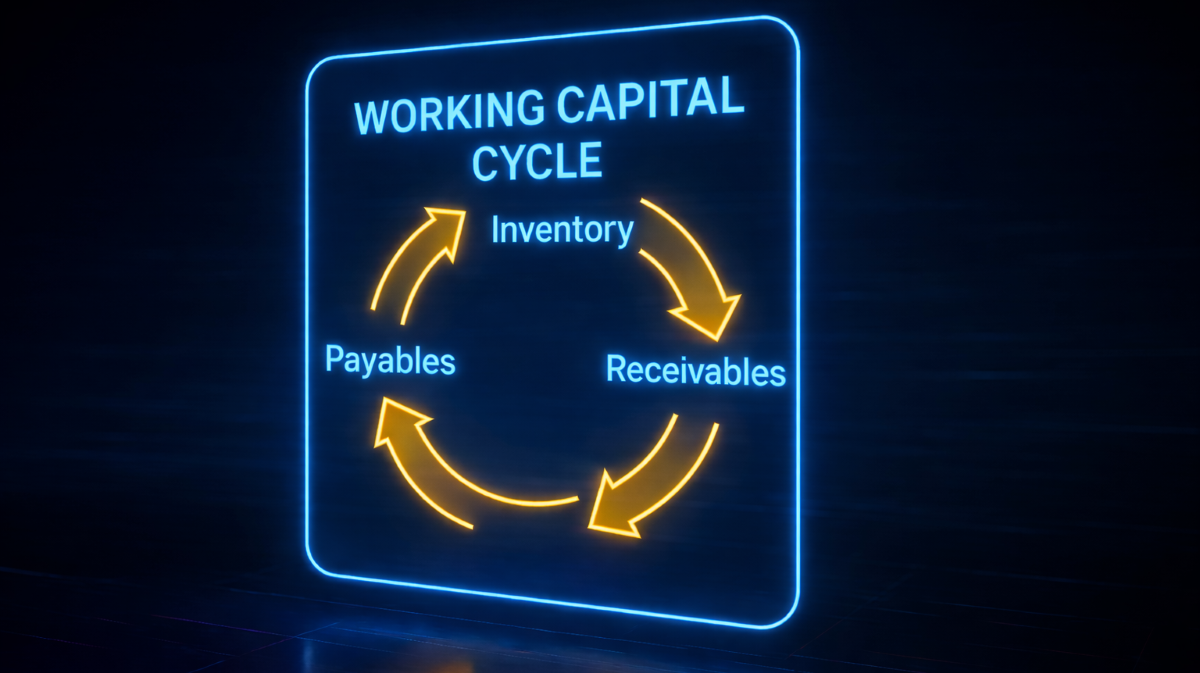
Working Capital is not, as many business owners assume, the amount of cash in company’s bank accounts to operate. It is the difference between a company’s current assets and current liabilities.
More common in M&A, Net Working Capital (NWC) is equal to:
Current Assets (excluding cash or equivalents) minus Current Liabilities (excluding financial debt) in the business.
The definition of working capital appears objective, but in M&A, components of working capital are often subjective and defined between the parties during lengthy disputes.
Why It Affects the Purchase Price
Properly calculating NWC is important in M&A transactions because the buyer must make sure the target company has a sufficient amount of working capital to smoothly continue operations after transaction closing.
Commonly, M&A transactions include working capital as a price adjustment mechanism upon transaction closing, parallel to the Net Debt adjustment.
Otherwise the Seller could be inclined to:
- delay liabilities payments,
- liquidate inventory
in order to increase cash proceeds from transaction.
NWC Discussions in the M&A Process
Calculating the working capital adjustment mechanism that is acceptable to both parties and clearly defining NWC in the share purchase agreement are crucial steps:
- LOI / Term Sheet: the parties agree on whether working capital adjustment will be included in the transaction.
- Financial Due Diligence: initial working capital target (or “peg”) is calculated, based on balance sheet analysis.
- Purchase Agreement: Parties negotiate, what items precisely will be included in working capital and how it will be calculated. In most cases, a historical average, typically based on accounts from the previous 12 months, is the basis for future reference and considered as a “normal” level of working capital. Trailing 12 months will naturally factor out seasonality. However, the time frame can make a big difference, and specific adjustments can also be negotiated for one-off situations, similarly to EBITDA adjustments.
- Transaction Closing: actual NWC is estimated at closing and the difference is calculated between “normal” level of working capital and the actual NWC.
- Post-Closing Adjustment is usually necessary, as actual net working capital as of transaction closing can be calculated only within 1-2 months after closing. The final amount is compared with the target (peg) / “normal” level, and any difference is reconciled between the parties, thus increasing or decreasing the final purchase price, on 1:1 basis.
Negotiating the NWC Adjustment – Guidelines for Sellers
1. Prepare an early analysis in order to understand working capital needs of your business
Before launching the company sales process, a qualified financial advisor should perform an analysis including working capital assessment. This calculation may have a strong impact on the final purchase price, as it allows you to:
- Understand the actual NWC needs of your business,
- Prepare for negotiations,
- Avoid unfavorable SPA terms related to NWC adjustment.
2. Start operating with lower NWC early
Businesses can optimize cash flow, improve short-term liquidity, rationally increase accounts payable and thus reduce working capital while preparing to the M&A transaction. However, this must happen several quarters before the transaction to prove and be considered sustainable.
3. Carefully define Net Working Capital in the SPA
Include a comprehensive definition of working capital in the share purchase agreement to avoid further dispute.
Conclusion
The M&A transaction and both of its Parties benefit from an early preparation for working capital adjustment of the purchase price. When it comes to selling your business, details that seem small and highly “accounting” – type may have a high impact on the amount of cash the Seller gains from a transaction.
Details such as NWC adjustment may explode even several months after closing. Therefore, it is worthwhile to:
- Explore the concept of NWC,
- Manage its levels with maximum awareness,
- And to take professional advice when it comes to preparing your business for sale.